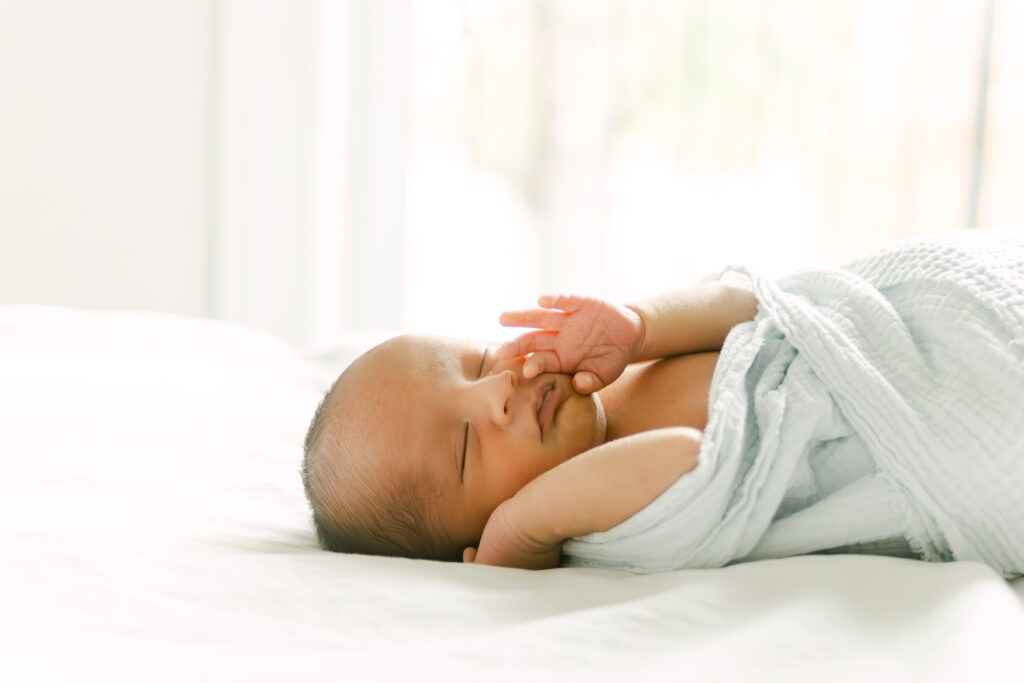
If you’ve been wondering about newborn photography sleeping tips, you’re in the right place. As a Dayton newborn photographer, I want to help you have the smoothest possible session, so let’s talk about it.
Your baby is here. You’ve scheduled your newborn photography session. You went shopping for coordinating outfits for your baby and the whole family, furry friends included. The day is finally here, and… your newborn is wide awake. What now?
No worries, friends. Your baby is beautiful, and we’ll get gorgeous photos of them whether they’re sound asleep or bright-eyed and alert. It’s completely normal for a newborn to spend part of the session awake — some of the sweetest, most genuine images actually come from those alert, curious moments.
That said, there really isn’t much cuter than a sleeping baby during a newborn session, so here are my best tried-and-true tips for helping your little one settle.
Newborn Photography Sleeping Tips
Most of these tips will feel familiar, new parents — they’re probably some of the same things you already do to get your baby to sleep every day at home.
Swaddles are magical. I’ll almost always recommend a swaddled baby for a session, for a couple of reasons. First, it’s simply adorable — the quintessential newborn photography look. Second, a swaddled baby is typically a calmer, more settled baby, which usually means a smoother session overall.
Feed, rock, and shush. Nurse or feed your newborn, rock them gently, and use the same soothing shush or hum you’d use at home. Do what comes naturally here — you know your baby best, so trust your instincts. If your baby uses a pacifier, feel free to bring it along. I’d just recommend a neutral or simple-looking pacifier so it doesn’t become too visually distracting in photos.
Use a sound machine. White noise is wonderfully calming for newborns and helps block out any distracting or startling sounds during the session. If you have a small travel sound machine, this is a great time to bring it along, whether we’re working in your nursery or my studio.
Keep the room warm. A warm room helps mimic the environment your baby is used to, and tends to encourage settling far more than a cooler space. According to the American Academy of Pediatrics, newborns regulate temperature less effectively than older babies, so a warm, comfortable room isn’t just about sleep — it’s about genuine comfort throughout the session.
Time the session around a recent feeding. A newborn who’s just eaten and feels physically comfortable is far more likely to settle into sleep than one who’s hungry or overstimulated. I’ll always work with you to plan session timing around your baby’s natural rhythm as closely as possible.

A Note on Newborn Photography Safety
Since we’re talking about sleep, it’s worth touching on safety too. Some of the classic, dreamy newborn poses you see online — a baby curled in a bowl, or propped on their chin with their head resting on their hands — require specific training to achieve safely. These are almost never done in a single unsupported pose. Instead, an experienced newborn photographer uses careful support, a spotting hand just out of frame, and sometimes combines multiple safely-taken images later during editing, rather than ever leaving a baby unsupported.
The American Academy of Pediatrics emphasizes that a newborn should always have proper head and neck support, and should never be left in a position they can’t safely hold on their own. As your photographer, your baby’s safety always comes before any specific pose — if something doesn’t feel steady or comfortable for your baby, we simply adjust or move on to something else.


What If My Baby Just Won’t Settle?
Some babies are naturally more alert during a session, and that’s completely okay. If your baby isn’t settling into sleep despite your best efforts, we simply shift the plan. Awake newborn portraits — wide eyes taking in the world for the first time — are often some of the most treasured images from an entire gallery. I never force a sleeping pose if your baby isn’t cooperating; we go with whatever your baby is giving us that day.
The CDC’s guidance on newborn behavior is a good reminder that sleep patterns in the first weeks of life are highly variable and not something parents can fully control — which is exactly why flexibility, not a rigid plan, is the key to a successful session either way.
Trust Your Instincts
You are the best parent for your baby, and you know them better than anyone else in the world. Do what you do best, and soothe that sweet baby however works for your family. These soothing moments — rocking, shushing, singing, cuddling — often make for some of the most wonderful, intimate photos of the whole session. So much of the newborn phase is spent exactly like this, so it’s only natural to capture it on camera, awake or asleep.
You’ll love looking back at your gallery years from now and remembering those early newborn days, swaddle and all.
Preparing for Your Session
A few additional things that help set your baby up for a settled, successful session:
- Feed shortly before arriving or starting, so your baby is comfortable and not distracted by hunger
- Bring a familiar item, like their usual swaddle blanket or a pacifier they already use
- Dress your baby in loose, easy-to-remove layers ahead of time, so getting them ready doesn’t overstimulate them right before we begin
- Keep your own expectations flexible. Some babies settle in minutes; others take longer, and both are completely normal
In-Home or Studio: Which Helps With Settling?
Both in-home and studio sessions can work beautifully for a sleepy, settled baby. In-home sessions have the advantage of familiar surroundings — your baby’s own nursery, your own white noise machine, your own routine already built in. Studio sessions offer a fully climate-controlled, quiet environment designed specifically for newborn comfort, without any of the usual distractions of home. If you’re weighing which setting might help your baby settle best, I’ve laid out both options on my in-home newborn photography page and my studio newborn packages page.
Why Sleep-Focused Sessions Are Worth Planning For
There’s a reason so many families specifically hope for a sleepy newborn session: those soft, curled, peaceful images capture something that genuinely only exists for a few short weeks. Once your baby moves past the newborn stage, that particular kind of deep, easy sleep — where they can be gently repositioned without stirring — becomes much harder to come by. It’s part of why timing your session within the first couple of weeks after birth gives you the best odds of capturing those classic sleeping portraits, even though wonderful images are absolutely still possible later on.
That said, I always want to manage expectations honestly: even with perfect timing and every tip above, some babies are simply more alert by nature. That’s not a failed session — it’s just a different, equally valuable kind of gallery.
What Happens if We Need a Break Mid-Session
If your baby becomes fussy, hungry, or overstimulated partway through, we simply pause. There’s no rush and no pressure to push through. A short feeding or soothing break often resets things completely, and we pick back up once your baby is calm and ready again. Sessions are built around your baby’s needs first, not a fixed shot list — which is part of why I include enough time in every session for these natural pauses.
Serving Dayton and the Surrounding Area
Whether your session takes place in your own home or at my studio, the same principles apply throughout the greater Dayton area: patience, flexibility, and a genuine focus on your baby’s comfort over any specific pose. These sleeping tips work just as well whether we’re in your nursery or in a fully climate-controlled studio space.
Frequently Asked Questions
What if my baby won’t fall asleep at all during the session? That’s completely fine. We’ll capture beautiful awake portraits instead, and many families end up loving these just as much as sleepy shots.
Is it safe for newborns to be posed while sleeping? Yes, when done by an experienced photographer using proper support techniques. Safety always comes first, and certain poses are achieved through careful support or combined images rather than a single unsupported position.
Should I feed my baby right before the session? Yes, a recent feeding often helps babies feel comfortable and more likely to settle. We can also pause for a feeding mid-session if needed.
Can I bring our own sound machine or swaddle? Absolutely — familiar items from home often help babies settle more easily, whether we’re shooting in-home or in the studio.
Ready to Book Your Session?
Reach out here to book your Dayton newborn photography session — I can’t wait to capture the magic of your sweet family, sleeping or wide awake. You can also browse more real sessions on the journal for inspiration.
Talk soon, Janelle
Leave a comment ⟶
comments
0